
Catch the World Premiere of "Gowanus Current"
From factories to glass towers: local filmmakers document a radically changing neighborhood

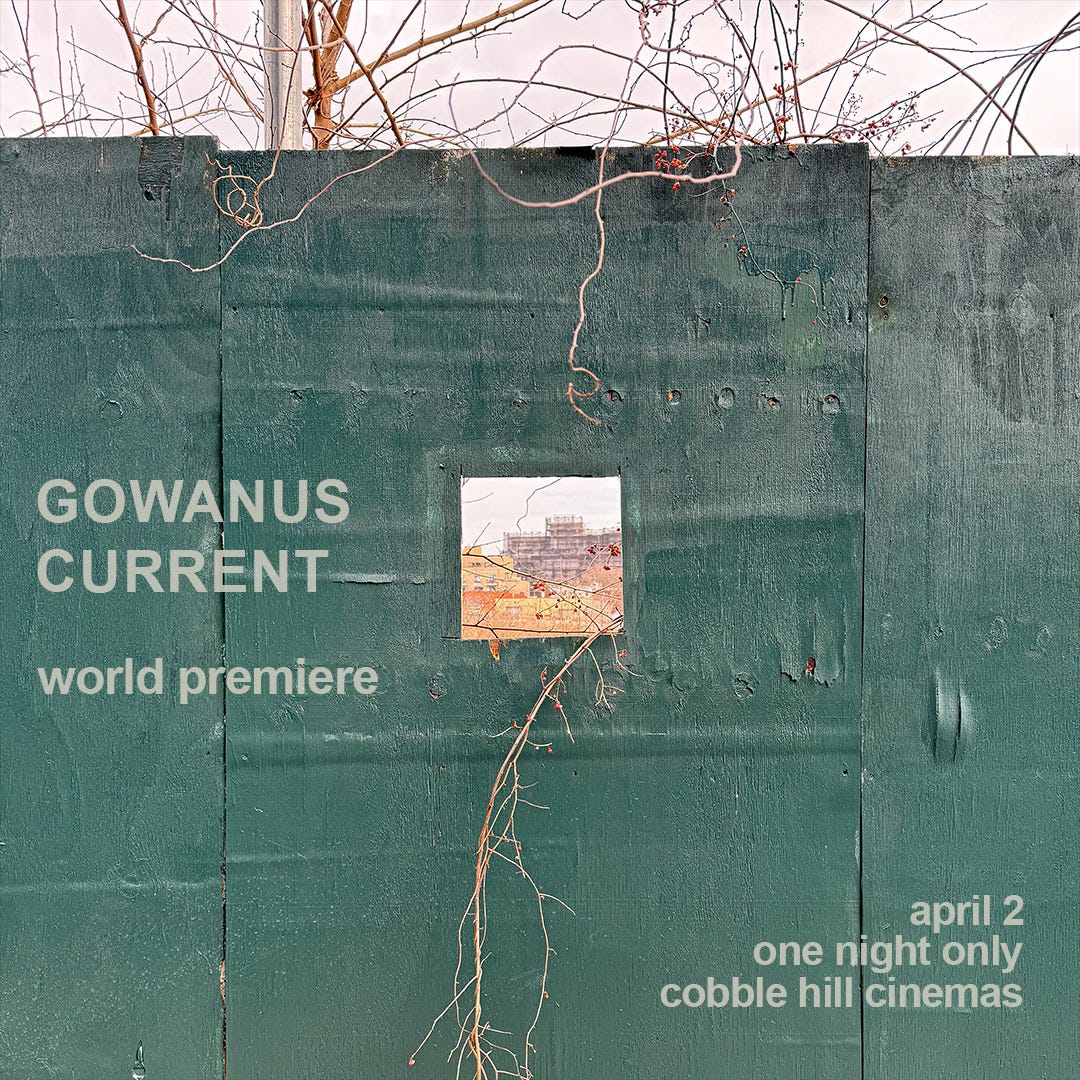
The long-awaited premiere of Gowanus Current is finally happening! On Wednesday, April 2, filmmakers Jamie Courville and Chris Reynolds will debut their ten-year opus on the big screen at Cobble Hill Cinemas.
The film is a visual time capsule, documenting the lengthy and divisive Gowanus rezoning process as well as the passionate locals who supported and opposed plans to redevelop the formerly industrial neighborhood. Filming began in August 2013, just before the Whole Foods on 3rd Street opened, which for many marked the beginning of the end of Gowanus. Courville and Reynolds shot over 400 hours of footage across ten years, capturing the dramatic changes happening around them. They filmed countless community meetings, cultural events, ribbon-cuttings, business openings and closings, and “a lot of things being torn down and a lot of things being built up,” says Courville.
Originally from Texas, Courville and Reynolds moved to New York City in October 2001. They lived in Williamsburg, Bushwick, and Sunset Park before landing in Gowanus. In 2009 the couple married and settled into a spacious ground-floor apartment on Douglass Street.
“It was great to have a really big apartment that was cheap on an industrial block that we had to ourselves after working hours,” Reynolds says. “I loved it so much. I loved the vibe of the place and how it felt a little free,” Courville fondly recalls. “There was always something happening.”
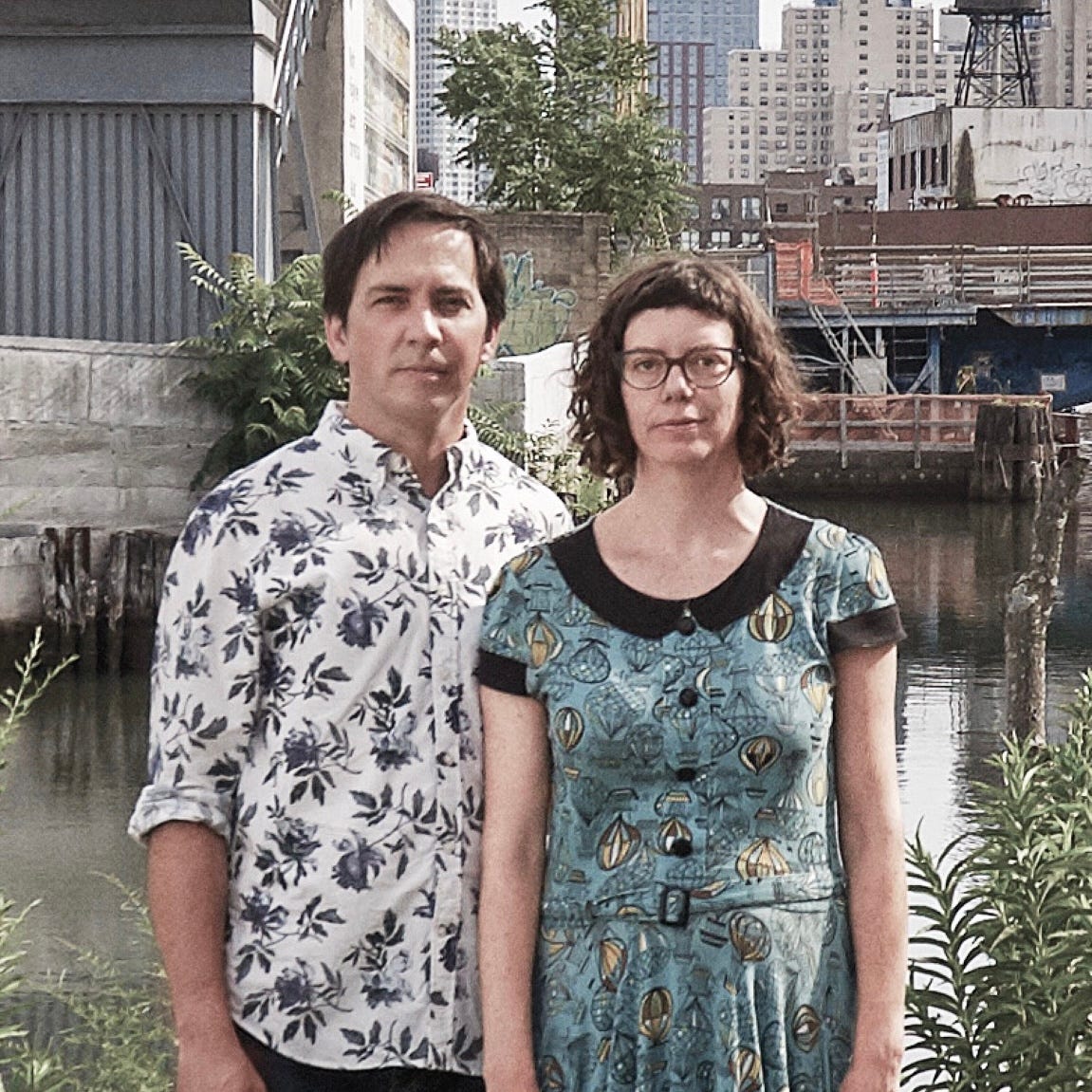
The bliss did not last. Not long after, things began to change around the neighborhood, with The Fairfield Marriott Hotel opening on the corner of Douglass and Third Avenue in 2011. “The thing that really started it for me was the brick building at the end of our block was torn down and became a Marriott. I couldn’t remember what it looked like before,” says Courville on what sparked the idea for the film. The two decided “before anything else goes away, let’s start memorializing a little bit, but then so much happened.”
“We were looking for a project and we thought let’s just look at what’s happening around us,” Reynolds says, noting that they never expected to work on “a feature ten years in the making.” Their plan was to make a film “about how the physical landscape around us changed and how we remembered it.”
They started by interviewing some of their friends and neighbors but ultimately did not use any of that early footage. “It was hard to know what to shoot when you could just shoot everything,” Reynolds notes. They began focusing on various forms of civic engagement and public, outdoor events, to create an “observational” film that does “a lot of showing, not telling,” according to Courville.
“We don’t do interviews. There’s no score. There’s no text on the screen,” Reynolds says of the final cut of the movie. “The people who are speaking on camera were speaking to a different audience, to a community meeting audience, or something like that, and we tried to be a fly on the wall.”
“In the final version of this film, everything that you see is something that anybody could see, and that was important to us,” Courville adds. “Sometimes with vérité documentaries, it does feel very performative…. It feels like they’re doing it for the camera. We don’t have that. Nobody’s performing for us.”
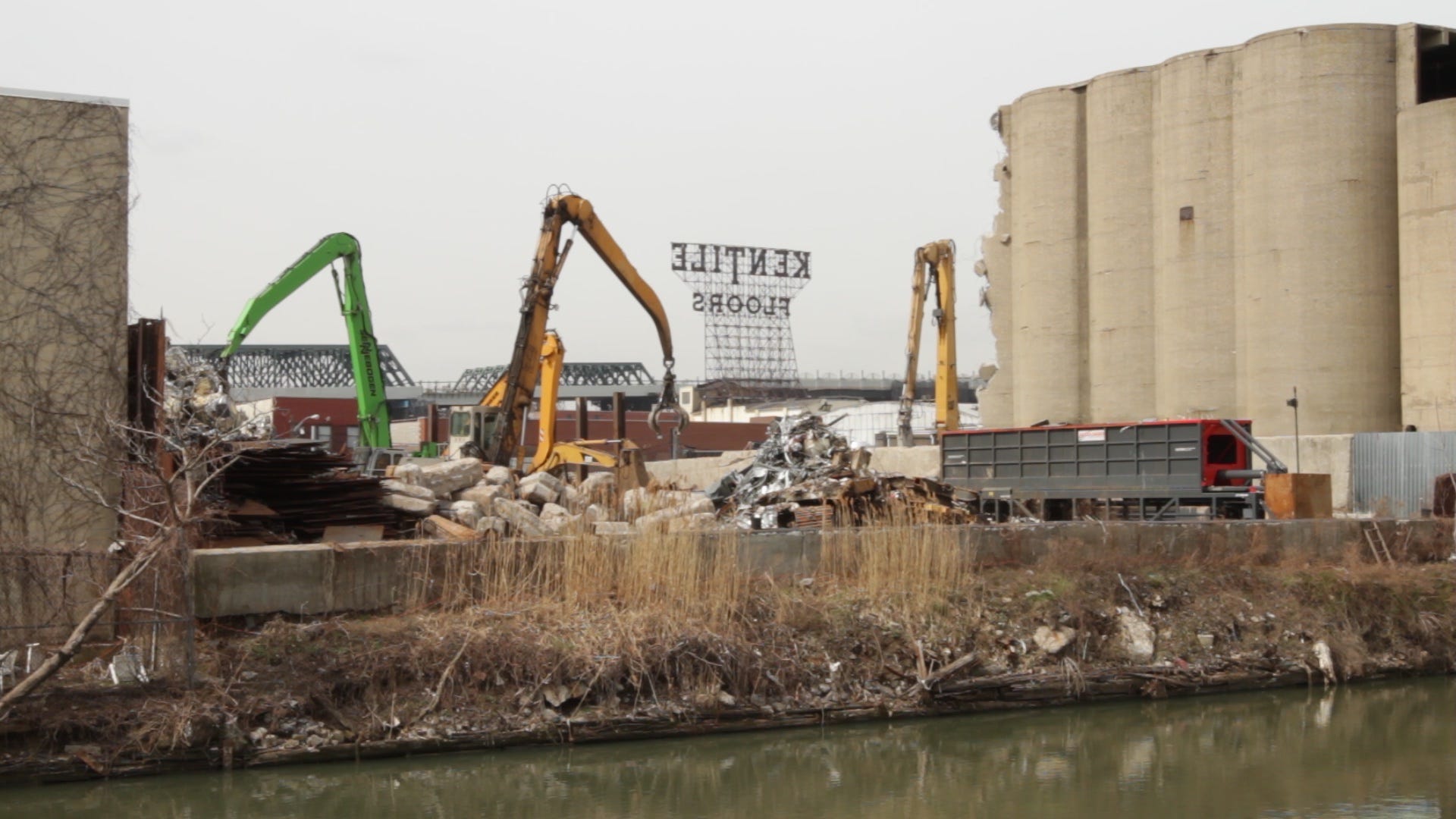
Editing the hundreds of hours of footage down to 89 minutes took a year. “It’s a very intricate edit,” Courville notes. “Every shot does something, and they often interact with each other, but in very subtle ways.” Some viewers may be surprised by the non-narrative approach of the film. “This may not be in a style that people are accustomed to, so just be ready to sit back and go on a journey for a little bit,” she suggests. “This is meant to be seen in a theater surrounded by people who are also interested, probably your neighbors, to be seen together as an event,” Reynolds adds. “It’s not something to watch passively on your phone.”
After seven years of happily living in Gowanus, Courville gave birth to their daughter Opal in 2016. Then, after several rent hikes and a carbon monoxide leak, the couple made the difficult decision to leave Gowanus and move to Cobble Hill.
“It was great because we were still able to walk to Gowanus and finish the film and stay connected to that,” Reynolds says, but ultimately, the couple missed living at the center of it all. Previously, “every time we walked out of our front door, we were in Gowanus. Everything we saw around us reminded us of what needed to be recorded…. [After we moved] it was stressful to feel like we were missing something.”
“I really did love living in Gowanus,” Courville muses. “I wouldn’t want to go back right now, but I loved the time that we had there.”
Despite having less time to shoot due to parenthood, and being slightly further away from the action, the pair persevered for the next seven years, continuing to capture as much on film as they could, including the 2021 passing of the Gowanus Rezoning at City Hall. “That’s the only thing we did not shoot in Gowanus,” Courville notes. “But that wasn’t the end of the movie,” Reynolds adds. “If we ended the movie there, I think it would give the wrong idea about what we are trying to say.”
The filmmakers want Gowanus Current to show viewers what it is like when a neighborhood undergoes a rezoning process. Reynolds says that people featured in the film, on both sides of the development debate, raised valid questions about the loss of industrial space, climate concerns, the Gowanus Canal cleanup, and more, and there aren’t any “yes” or “no” answers. “What I hope this film does is let people feel what it’s like to go through it. You always hear about rezonings in other neighborhoods, but when it’s yours, it’s quite different,” Courville says. “I never see myself on screen, I mean that metaphorically as well as literally. I want people to see themselves on screen.”
The pair also hopes the film will show viewers how they can become more engaged in their communities. “I definitely learned a ton about the city,” Reynolds says. “I liked seeing how these decisions get made and seeing how the city works because I’ve lived here for a long time and I’ve never really been engaged or involved in this sort of stuff. I think it’s fascinating to see how this complicated process of planning for New York really goes down.”
The film required a lot of hard work and long hours planning, shooting, editing, fundraising, and promoting. “We did a whole lot with a team of two,” notes Courville. “We did a lot with a little, and that was challenging.”
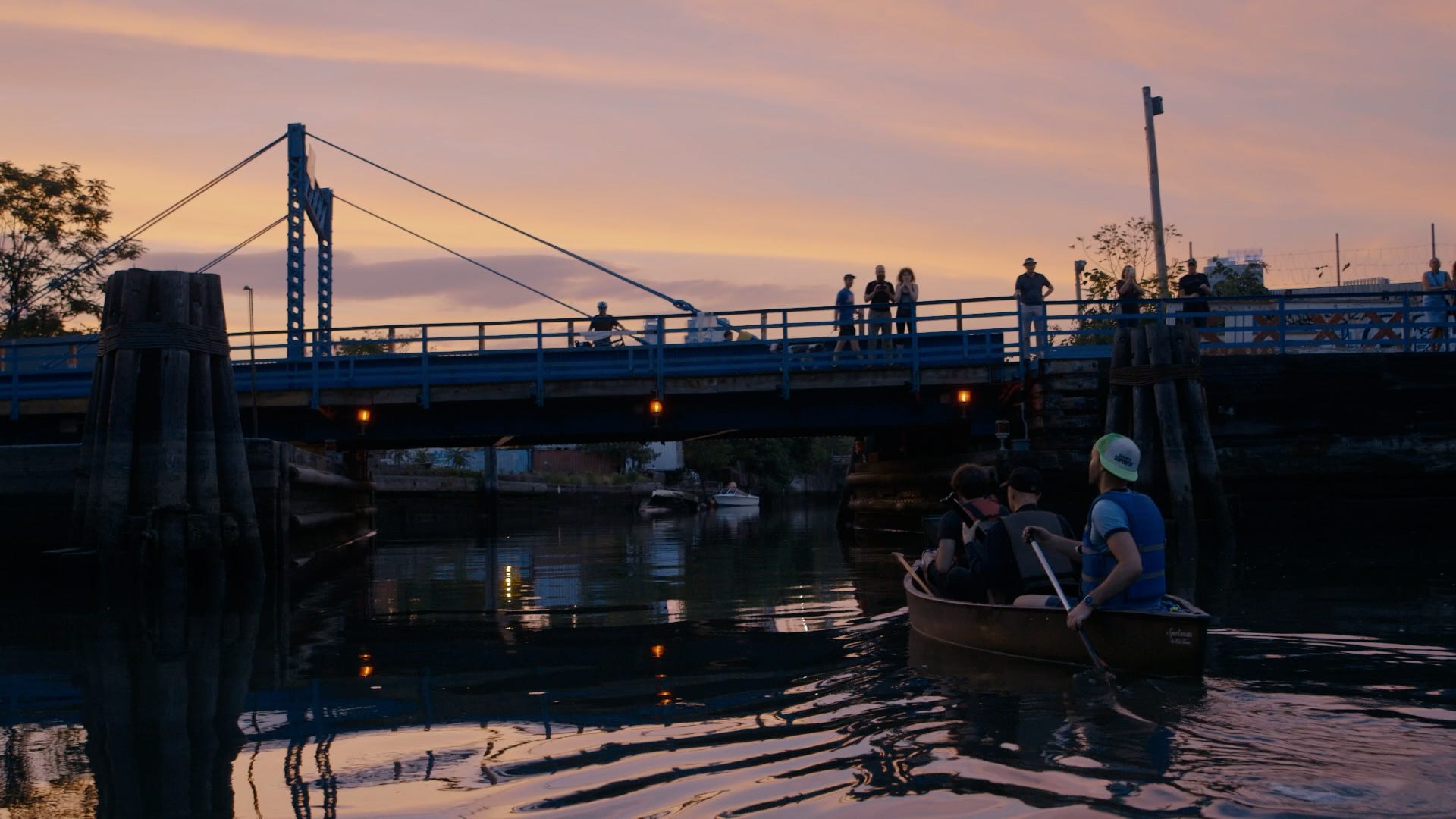
Along with challenges, the film also brought the couple joy. “I love the moments when you’re shooting something and you know, ‘this is it.’ You feel something magical happening in front of you, and you’re there as part of it. It’s just the best feeling,” Courville says. One of these moments was a 90-minute guitar performance by Elliott Sharp on a canoe floating along the Gowanus Canal. “It had a transcendental feeling,” she recalls.
After ten years of shooting and hundreds of hours of footage, the last scene Courville and Reynolds shot is also the final scene in their movie. “We’d been looking for an ending for several months after the rezoning was officially signed off on,” says Reynolds. “I remember shooting it and thinking, ‘I really like this.’” They won’t give away any spoilers, so viewers will have to wait until April 2 to see how they wrap up their Gowanus saga. “It was one of those magical moments,” Courville promises.
Following the April 2 screening of Gowanus Current, there will be a Q&A with the filmmakers moderated by 2023 Pulitzer Prize finalist Xochitl Gonzalez, a staff writer for The Atlantic and author of Anita de Monte Laughs Last and Olga Dies Dreaming.
Visit gowanuscurrent.com for more info on the film.
** Tickets for the premiere of Gowanus Current on April 2 sold out fast. Click here to be added to the waitlist. **
Pam Wong is a Brooklyn-based writer and curator who loves contemporary art and sharing community stories. Follow her on Instagram at @arthagnyc. For more of her writing, go to arthagnyc.substack.com.