
Inside Gowanus’ Combined Sewage Overflow Problem: Can Billion-Dollar Tanks Save the Canal?
As Gowanus redevelops, residents and government agencies clash over how to solve the smelly issue.

Nick Bello is a writer and photographer based in Park Slope. He loves to capture local scenery as well as research local history. Follow him on Instagram @nbello8 or on substack at:

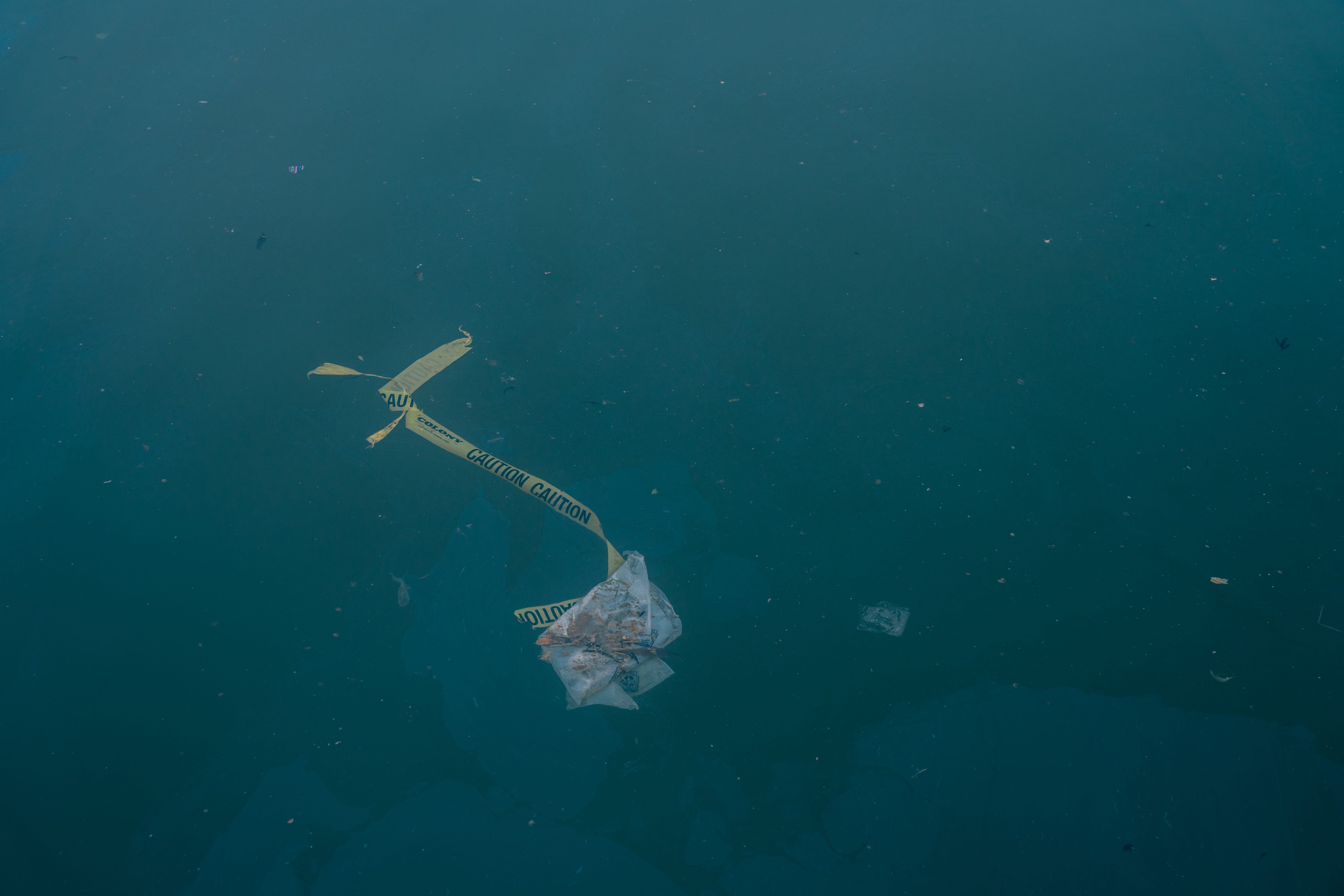
Gary Francis knows the Gowanus Canal like the back of his hand. As the captain of the Gowanus Dredgers Canoe Club, a volunteer organization that is dedicated to educating and advocating for the Gowanus Canal, he is one of many local residents who have made it their mission to educate the public about the canal and advocate for its cleanup. His Instagram page is filled with videos he takes just about each day of the canal, where he discusses its health that day and what factors contribute to it. Some of his most viewed videos are of what is known to locals as a “Poonami”, which is when a Combined Sewage Overflow (CSO) event happens, releasing raw sewage into the canal resulting in a brown wave that migrates down the canal.
A few days before I met up with Francis, a CSO event had occurred. These events only happen during major rain storms or when large amounts of snow melt, where the sewer systems are overwhelmed with stormwater and have no choice but to dispel some of their built up contents into our waterways. This has not helped the public perception of the canal, as fast flowing poop water only helps to fuel its reputation as a place where no one should visit, let alone build new apartment buildings. Francis points to things in the water that are tell-tale signs of a CSO event. Brown specs of fiber floating atop the water that come from the poop of everyone who lives nearby. A dental flosser that someone improperly flushed down their toilet. And what Francis refers to as a “Coney Island White Fish”, a colloquial term he has developed for condoms.
The tanks, which are the responsibility of the city to build, were six-and-a-half years behind schedule and would now cost over $1 billion as a result of these delays, a 1,300-percent increase compared to the EPA’s original assessment.
Planning & Construction of the Tanks
In 2013, the U.S. Environmental Protection Agency (EPA) submitted their Record of Decision (ROD) for the Gowanus Canal Superfund cleanup. In this 105 page document, the EPA laid out their suggested remedies for cleaning up the canal, one of which was the installation of Combined Sewage Overflow tanks. The tanks are the responsibility of New York City to build, as they were deemed a potentially responsible party (PRP) for the CSO contaminants in the canal. The city has tasked the New York City Department of Environmental Protection (NYCDEP) as the agency to execute the plan under the EPA guidelines.
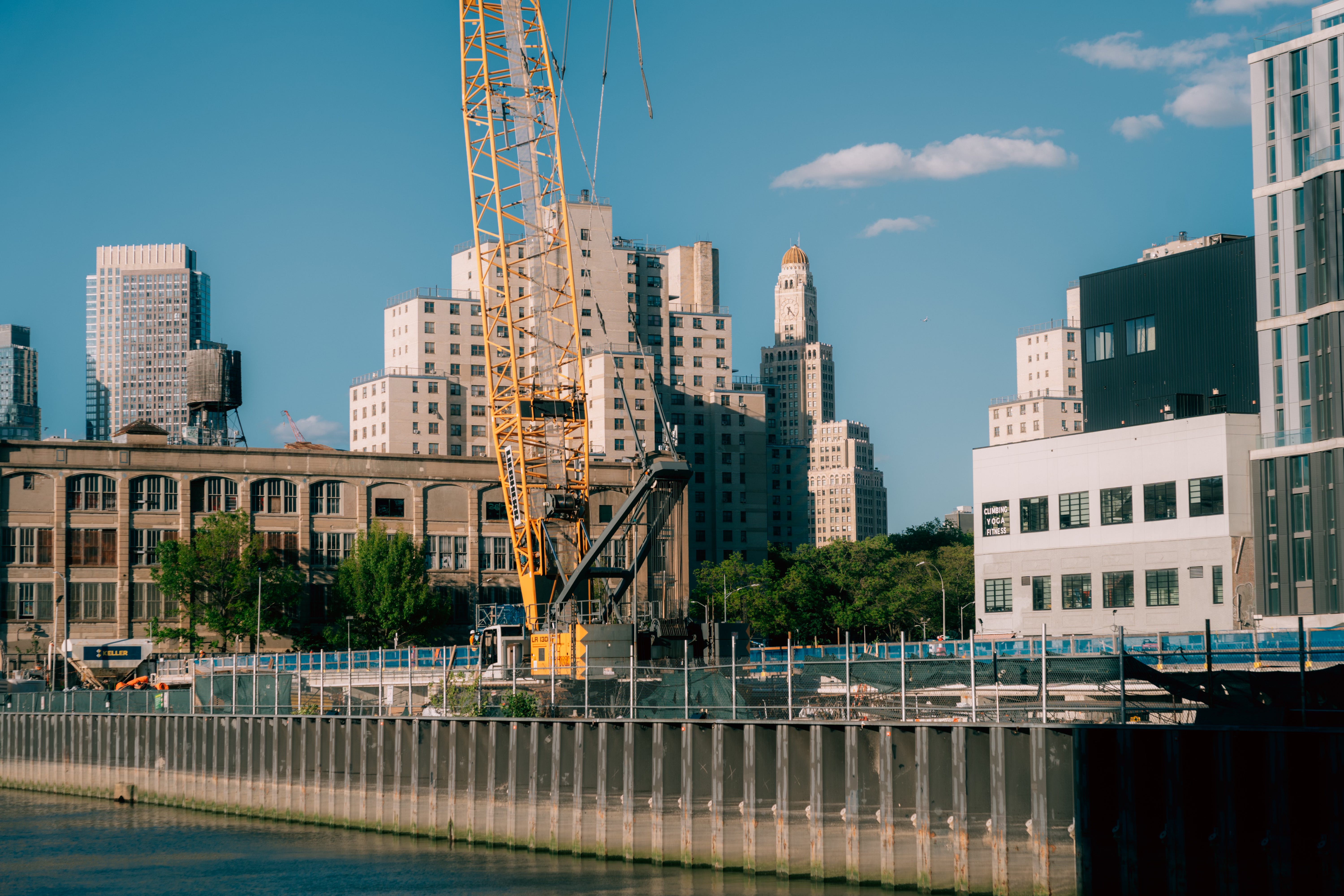
In the event of heavy rainfall, these tanks are designed to catch what is called the “first flush”, which contains most of the solids (poop) as well as chemicals and other debris that comes from the streets that have built up in the sewer pipes. These tanks correspond with the two sewersheds which are the main culprits when it comes to CSO in the canal. The Red Hook tank, also known as RH-034, will be able to contain 8 million gallons of CSO and the Owls Head tank, also known as OH-007, will be able to contain 4 million gallons of CSO.
When it comes to communication about this remedy, the EPA and DEP have remained fairly consistent. However, a comment made by then EPA chief engineer, Christos Tsiamis, during a town hall conducted by the Gowanus Canal Advisory Group (CAG) on June 22nd, 2022 caused some confusion amongst the community. In the meeting Tsiamis responded to a question about whether or not the tanks were made to the correct sizes and accounted for the rapid redevelopment of the neighborhood. Tsiamis said, “I am the engineer who calculated the volumes for the tanks. I want to say, you are absolutely right because when I calculated (the tanks), I did not expect the kind of rezoning that was happening now.” This was an alarming claim which stoked the biggest fears of local residents.
Katia Kelly, who has been a resident of Carroll Gardens and Gowanus for 40 years and covered the early days of the Superfund process via her blog Pardon Me For Asking, remembered talking to Tsiamis about the tank sizes. “I don’t know if he ever said it in meetings, but privately, his first calculations (based on a smaller rezoning) were 12 million gallons and 6 million gallons,” Kelly said. Tsiamis left the EPA in June of 2023 and cited in a letter to the CAG that the making the CSO tanks part of the canal cleanup plan was one of the multiple achievements he was a part of. Tsiamis did not respond to multiple requests for comment for this article.
In a meeting the following month, Brian Carr, who is the Assistant Regional Council for the EPA, explained that this claim was not accurate and that the question leading into Tsiamis’ response led to some confusion. “If we thought the tanks needed to be a different size, you would have heard that from us five years ago,” Carr said. Later on in the meeting, he would offer an explanation as to how the tanks work. “As climate change and redevelopment happen you may exceed the 4 and 8 million gallon capacities, but they will still capture pretty much all the solids as they go through the settling system in the tanks,” Carr explained. “To the extent that there is overflow, it gets diluted as there is a longer storm and more storm water. So no matter how big the future storms are, we hope that the tanks will continue to function,” he concluded. When asked to sum this up further Carr said that the tanks are sufficient enough, “as long as the city implements its storm water regulations and the other provisions that the EPA has required under the Record of Decision.”
In 2022, Voices of Gowanus, who are a local grassroots association that also advocates for the canal cleanup, as well as a few other local organizations filed a lawsuit against the city and several agencies in an effort to overturn the Gowanus rezoning. According to an article in the Brooklyn Paper, the suit alleged that New York City and other agencies failed to do their due diligence when it came to the long term impacts the proposed rezoning would have on the sewer infrastructure and flooding. They cited a letter where Doug Gabarini, who was then the head of the EPA’s New York branch of the Superfund and Emergency Response division, said that the draft statement of the environmental feasibility study conducted by DEP had inconsistencies when it came to CSO projections. This suit was ultimately thrown out in July 2022 by Justice Consuelo Mallafre Melendez. In Melendez’s decision, she said that the lawsuit was inadequately filed, as the attorney for Voices of Gowanus filed the suit in February but did not serve the city with the documents until April. She also said that the letter from Gabarini was about the draft statement and not the final statement in which the EPA concluded that there would be no significant impact on CSO discharge.
Redevelopment
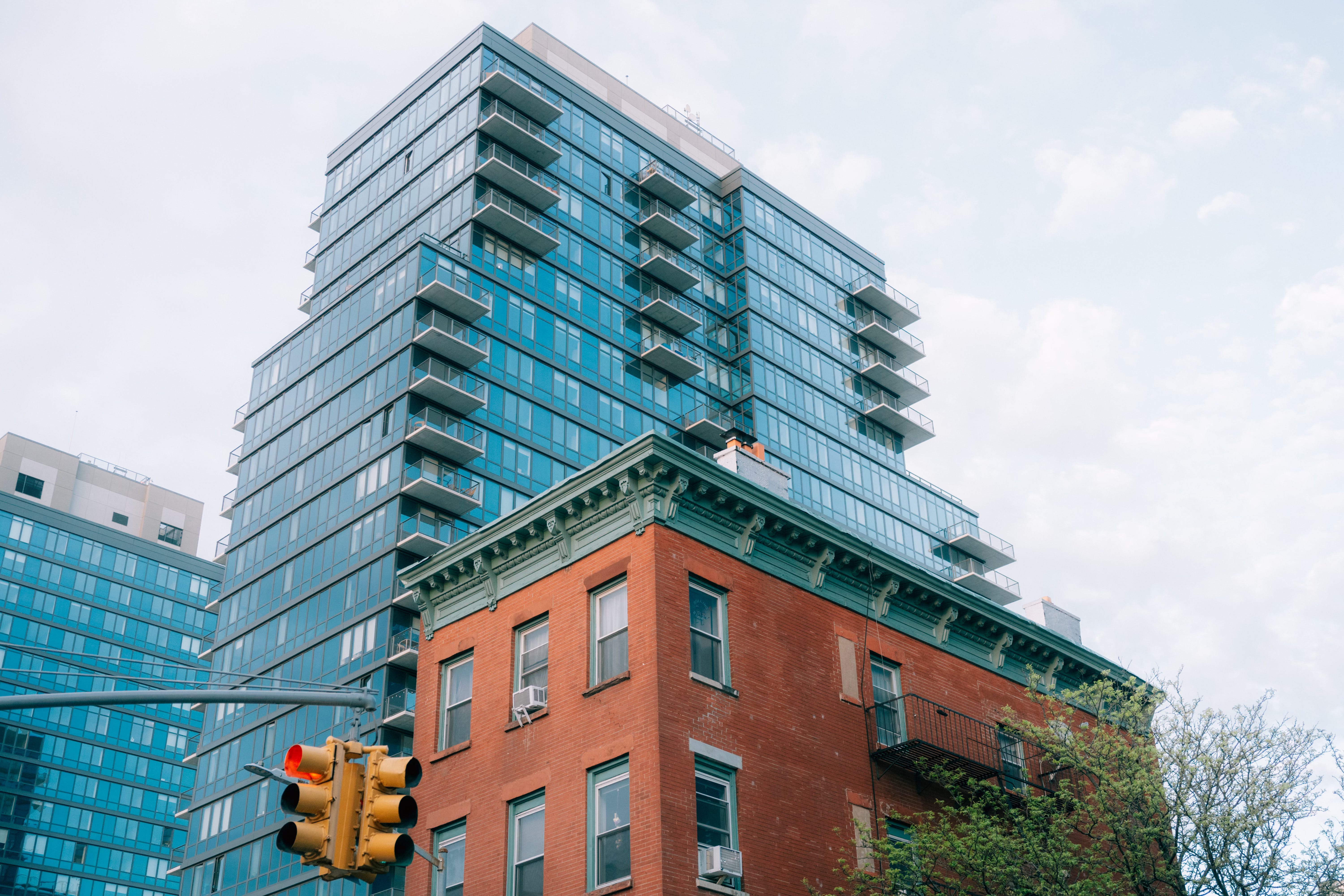
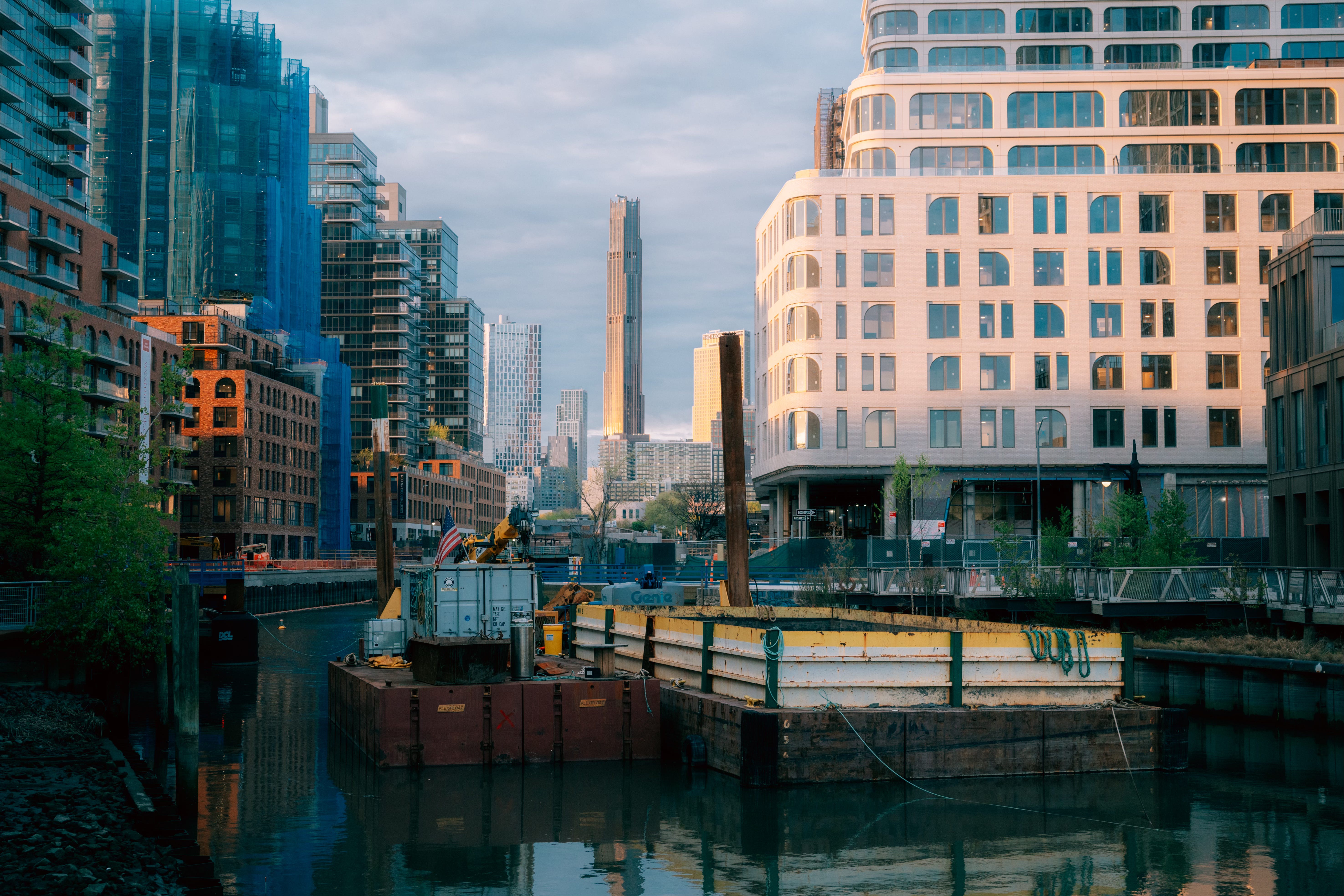
A main driver in the community concern around the CSO tanks has been the rapid redevelopment in the area. In 2021, a rezoning plan was approved by then Mayor Bill DeBlasio that will add 8,000 new housing units spanning 80 blocks. Some locals claim that this rezoning was significantly larger than expected and that government agencies did not factor this much larger rezoning into their calculations for the tanks. A target for some of the blame has been former New York City Comptroller Brad Lander, who has been credited for getting the rezoning approved when he was a city councilman and advocated for more housing. A common misconception is that adding more people, thus more toilets, will cause more CSO to flow into the canal. While there is concern with people flushing during rainstorms which does overwhelm the sewer system and helps lead to CSO events, the system is built to handle more residents as part of the rezoning plan.
In a statement from an EPA spokesperson to Park Slope Pulse, the EPA backed up their calculations saying, “while there has been development around the canal, the sewer shed that drains to the Gowanus Canal covers more than 1,600 acres, while the Gowanus neighborhood itself is less than 100 acres. The Long Term Control Plan analysis accounted for future population growth through 2040, and development occurring near the canal falls within those planning assumptions.”
A DEP spokesperson told Park Slope Pulse that the Gowanus Canal receives 263 million gallons of CSO per year. To combat CSO, the DEP spokesperson said they are also relying on what is called the Unified Stormwater Rule, which is a law enacted in 2022 that requires new developments with a soil disturbance over 20,000 square feet or new impervious areas over 5,000 square feet to maximize stormwater management by using green infrastructure (trees, plant beds and porous concrete) to help retain stormwater on their sites and prevent stormwater runoff, which is what primarily causes CSO events. With the new tanks and Unified Storm Water Rule in place, the DEP spokesperson said they will be able to reduce that amount to 100 million gallons for a 62% reduction in CSO.
Delays
The construction phase of the tanks has been fraught with delays. According to a 2024 audit by the EPA Inspector General’s office, the agency found that the tanks, which are the responsibility of the city to build, were six-and-a-half years behind schedule and would now cost over $1 billion as a result of these delays, a 1,300-percent increase compared to the EPA’s original assessment.
The first delay came with the initial planning phase as the city chose a design that was much more complex than what the EPA had advised. The second delay was caused by the cities failure to build the tanks on public owned property, which would have saved the project time and money. The ROD originally suggested that the Red Hook tank should be built where Thomas Greene Park currently is on Nevins and Douglas Streets. However, the city pushed back on this as it would take away a park in an area that was already underserved and it would cause a disturbance to the community. As a result, the city opted to build the tank on privately owned property across the street which they would acquire through eminent domain. The city then also decided to acquire more private property for the Owl’s Head tank as well. This process increased the cost of the tanks by $200-$300 million and also delayed the process by more than a year.
The city then also wanted to construct a tunnel system instead of the tanks and used $1.6 million in funds to design the system. Three years later, the EPA rejected this idea, costing more time and money. During this time the city also defunded the Owl’s Head tank construction and used those funds to focus on the Red Hook design. The city also alerted the EPA that one of the buildings where the Red Hook tank would now be may need to be preserved in accordance with section 106 of the National Historic Preservation Act. It took three years to resolve this issue according to the EPA audit.
The audit suggested that the EPA Region 2 office, which is the office that is managing the cleanup, closely monitor the construction of the tanks and take necessary action to ensure that the project is completed to the EPA’s satisfaction. When asked why the tanks were delayed, the spokesperson for the DEP said, “DEP and the EPA agreed on an aggressive timeline to complete the project and are proceeding with construction based on that schedule. The tanks are currently anticipated to come online in 2029, with related construction work completed the following year.”
Ghost Streams
Throughout the Gowanus Superfund cleanup locals have played an active role by not only voicing their concerns to government agencies, but collecting data themselves. Eymund Diegel, a resident of Sunset Park with a deep background in urban planning, is one of the locals who has done his homework. Diegel has mapped out the hydrology history of the Gowanus area using old maps dating all the way back to the 1700s and comparing them to satellite imagery and data, resulting in comprehensive maps of what he calls “ghost streams”. According to Diegel, these streams are still active today and are not only beneath our feet, but also run through the basements of the residents of Gowanus as well. The existence of these streams, according to Diegel, are part of the reason why the Gowanus area still floods, leading to CSO events.
Diegel’s hypothesis may be hard to believe, but once you understand the hydrology history of the area, he seems to be on to something. The Gowanus area was once a marshy and heavily forested wetland that essentially caught a lot of the water that came down off the slopes surrounding it. Maps from the earliest days of Dutch and British settlement also show the streams (now ghost streams) that once occupied this area. Some of these streams were naturally occurring, while others were created by settlers in order to operate mills. The area also featured two ponds, Denton’s Pond and Brouwer’s Pond, which helped catch the water as well. As the area developed however, the once marshy land that essentially served as a sponge was replaced with concrete, which does not retain any water.
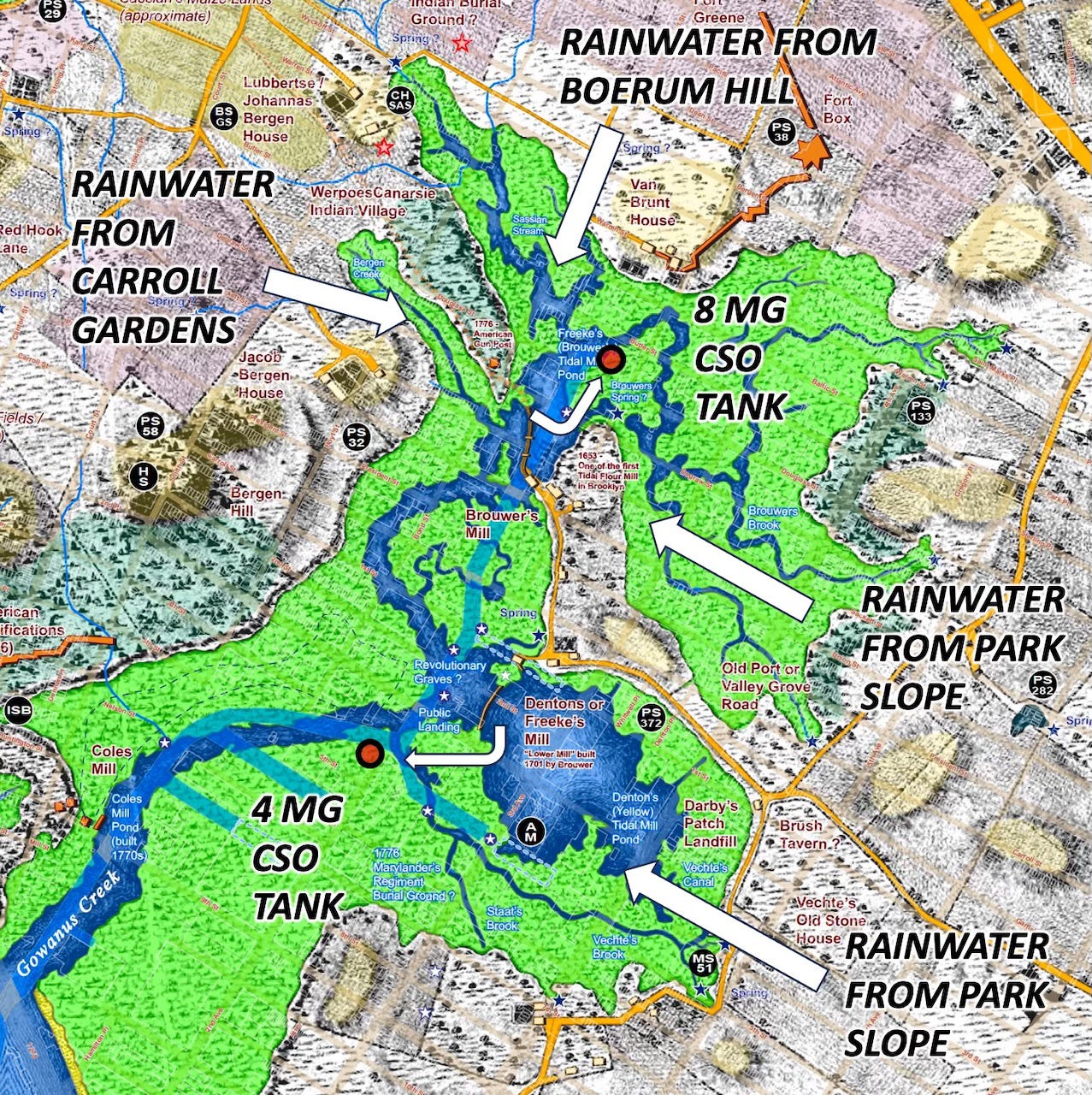
Diegel says that in order to fully address the CSO issue, this bit of hydrology history must be understood. Denton’s Pond was where the Whole Foods parking lot currently is while Brouwer’s Pond was where Thomas Greene Park currently is. Diegel says that the CSO tanks should be built close to the sites of the former ponds, but on the upslope, somewhere between 5th Ave and 6th Ave in order to be effective, which they are not.
In recent weeks, the EPA has refuted the existence of “ghost streams”. An EPA spokesperson said in a statement to Park Slope Pulse that the, “EPA understands the confusion around terms like “ghost streams,” which are sometimes used to describe how water may move beneath the surface in areas where historic waterways once existed. Historic streams in the Gowanus area were filled in during development of the canal and surrounding neighborhoods. Today, those filled-in former streams may serve as preferential pathways for groundwater movement through subsurface soil (underground). EPA’s site cleanup approach is based on data collected during the remedial investigation and remedy design process, including extensive additional pre-design investigations. This work evaluated groundwater conditions in detail, including how construction of the cleanup may affect groundwater levels (referred to as “mounding”) and subsurface flow. Thus far, EPA has not identified groundwater preferential pathways in its evaluations of the site.”
When asked why the EPA has said they do not exist, Diegel responded, “good PR is about denial.”
Solutions From Within
Diegel admitted that DEP has made it hard to conduct research on this issue due to the lack of publicly accessible data. “There’s a history of the DEP in this case not working cooperatively with the Superfund program,” Diegel said. “Then the other big problem is we simply don’t know with regards to the data, we don’t actually have a decent combined sewer overflow calculation model. So we don’t really know how big the pipes are, how they all connect and what their capacity is.” He went on to say that the data has been estimated and that, “we don’t actually have data taken from the actual pipe flows where we measure how much flows out. It’s all estimated and we just know it’s a lot of issues to move from mistrust to focusing on what the concrete solutions are.”
He has also helped advise a local company called Field Form, who are a Gowanus based landscape architecture studio that focuses on developing ways to mitigate flooding and help manage stormwater on properties. Field Form may be a part of the concrete solution to mitigating CSO as they have started by working on improving flooding and storm water management on local properties. Sam Robinson, who founded Field Form along with Line Kaasine said, “90% of our work is within what we would call the Gowanus Watershed neighborhoods. We advise through a tool that we have developed called flood forms, what a individual property is kind of exposure is to to both flooding through stormwater, but then also the strategies that can be implemented to mitigate or to retrofit as well as at the same time reduce discharge or stormwater flow into the combined sewer.”
Robinson also serves on the Gowanus Oversight Taskforce which is a volunteer group that essentially serves as a community watchdog for the Superfund cleanup, ensuring that the commitments and demands of the community are met. Part of his job on the taskforce is to, “make sure that they (government agencies) can understand from the community’s perspective the information that they need and how they can present that information in a way that is very easy for the average person to understand.” Robinson said that the taskforce, which holds quarterly public meetings, plans on having DEP do a presentation on the Unified Stormwater Rule. According to Robinson, the presentation will show a case study for how one of the new developments has implemented infrastructure to mitigate stormwater runoff into the canal. The meeting will be held at 6pm on June 9th at PS 133.
Combatting Misinformation
If you find yourself confused by all of this, you are not alone. Understanding the Gowanus CSO problem not only takes an advanced knowledge of science and engineering, but also requires knowledge of the hydrology history of the area as well. Andrea Parker, who is the executive director of the Gowanus Canal Conservancy, understands how these complexities can lead to confusion and even misinformation. “I think there’s just a general lack of clear, cohesive communication about very dense topics,” Parker said. “And then you couple that with people being upset about the change in the neighborhood and about redevelopment and this subject that can be difficult to understand becomes a good scapegoat.”
When it comes to the accessibility of data, which was also noted by Eymund Diegel, Parker believes that the data collected by the government agencies should be made public but the data is hard to interpret for those without a science background. She said, “it's a difficult question because I do think the data should be widely available. I think in the same way that there are GIS data sets for anything that you want to know about the city, any information that the city has should be accessible. But this presents challenges, as not everyone can be an expert in, or have the tools to understand the large amount of raw data that the government can provide. Just providing the data without analysis allows for misinterpretation and bad faith actors to pick and choose what they want to share and how they want to share it.” She continued saying, “in an ideal world, the different agencies and levels of government would work together to support the community in accessing and understanding this important data, to translate it for broad understanding in a timely and direct manner. But that’s not the reality - we’re not going to see all three levels of government working together seamlessly to provide comprehensive data. So what specific data and analysis can we ask for and actually get from each level?”
The data that is available often gets misrepresented according to Gary Francis, who specifically said that some parties at the CAG have done this in the past. “If you are an agency that is misrepresenting data, I have a problem with that.” He continued saying, “democracy is messy, but I do think it needs to have an honorable process to make it better.”
It is easy to believe that building new developments on an already toxic site like the Gowanus Canal can make things worse. But once the CSO tanks are built and with the Unified Storm Water rule in place, the science points to the fact that the new developments can significantly improve the overall health of the Gowanus Canal. “I'm not downplaying the very real concerns about contamination in the neighborhood,” Parker said. “Soil vapor intrusion is a big issue and people should be focused on that. People should be focused on making sure the existing CSO issues gets addressed. But new development is not causing pollution, it is actually the mechanism by which upland pollution is being cleaned up. And because of strong advocacy through the rezoning process, new development is held to much higher standards for water management, which actually reduces strain on our sewers.”
Editors note: An earlier version of this article said: “A common misconception is that adding more people, thus more toilets, will cause more CSO to flow into the canal. However, there is no correlation between the two as what causes CSO events is primarily stormwater.” This has been changed to now say: “A common misconception is that adding more people, thus more toilets, will cause more CSO to flow into the canal. While there is concern with people flushing during rainstorms which does overwhelm the sewer system and helps lead to CSO events, the system is built to handle more residents as part of the rezoning plan”. More information on this can be found here.
We’ve been waiting for this one!
Thank you! The people who fear forward progress are so loud. Excited for the new improvements to come.