
The Human Impact of Shopping Small
Park Slope designer Christine Alcalay explains why the fabric of community is more important now than ever

Leda Strong is a native New Yorker who lives in Park Slope with her husband, Andrew. Follow Leda on Substack for more.
For fashion designer and retailer Christine Alcalay, business is all about the people. First, there was her mother, a seamstress and pattern-maker who moved from Vietnam to the United States when Alcalay was young and immersed her in the world of clothing design – “and I’m not talking about in the glamorous sort of way…in the sleepless nights sort of way,” says Alcalay. Though initially hesitant to follow in her mother’s footsteps, Alcalay ultimately pursued a career in the garment industry, yet she imbued it with her own creative talent, a degree from Parsons School of Design, and a tenure in Paris.
In 2002, she and her business partner – who met working in retail on the Upper East Side – opened their first small business, the clothing boutique Kiwi, on Berkeley Place in Park Slope. 13 years later, following the retirement of her business partner, Alcalay opened the menswear store Fig next door to the new, larger Kiwi space on 7th Avenue, which by then featured Alcalay’s own designs alongside other brands in the store. Then, in 2023, Alcalay opened her eponymous boutique on 5th Avenue, which completed what she calls “the trifecta.” While each store has its own unique identity, she says, they are all part of a cohesive collection, which she proudly feels reflects the work ethic of all the people who help create and sell her clothes, and of course, the support of the Park Slope community who wears them. I spoke with Alcalay about what it means to run a small business, and how and why we should support them.

In the five years after opening Kiwi, “I felt like I took a master class in Park Slope,” says Alcalay, who describes occasionally walking down the street and trying to imagine what people passing by needed for their wardrobes. She relishes her ability to know exactly what local shoppers are missing, and then to design those garments properly; it’s also important to her that clients know how to care for their clothing, and that they can stop by the shop should they need to replace a button or ask any questions. Her craft as both a designer and a retailer means she is not only creating and sewing her pieces, but giving them a new journey and a new life each time they leave her stores with a customer. She likens this process to “a natural progression,” one that allows her to tell a complete story, and to go in deeply, “and do it well.” It also allows clientele a fuller picture of “the ingredients” and the people behind their final purchase. These practices separate small businesses from larger ones, who create more distance between consumer and product, often – but not always – compromise quality, and do not always market honestly or operate ethically, Alcalay says.
“If you stop shopping at Amazon or Target or other big stores, they’re not going to feel it,” Alcalay says. “If just a few people stopped shopping here, it would make a huge impact.”
Her service to the community, though, extends beyond designing and selling clothes in a transparent and interpersonal fashion. Alcalay’s stores have hosted community events, such as book swaps and a floral arranging workshop. As a small business owner, she adds, she and her teams are also the ones who create beautiful window displays for passersby to enjoy; who are often outside sweeping the sidewalk or checking on a child who seems lost or in distress; who donate to local schools; who hire local talent. “What we really do is service the neighborhood,” Alcalay says. In this way, it is the small businesses that a safe, charming and joyful neighborhood make, and just as she feels a deep responsibility to represent the Park Slope community, it is our investment in these small businesses that determine the community in which we live. Dollars spent locally stay local, Alcalay points out: Park Slope residents’ support of small businesses pours back into the local jobs they create and the environment we all live in.
“It is true that everything you spend within a small business or a local business stays within the community,” says Alcalay.
To date, Alcalay has always been in awe of local support and the way the community rises to meet challenges: challenges like the onset of the Covid-19 pandemic, a notoriously difficult time for small businesses that necessitated Alcalay to adopt a more public-facing role for the first time in her career. “I’ve always been somebody who is behind the scenes,” she says, but those infamously unprecedented times called for unprecedented measures, and Alcalay took to social media to appeal to Park Slope residents. Their response astonished but did not surprise her. “They’ve always been great,” she says, but calls the early days of the pandemic “a defining moment” as a Park Slope business owner, one that saw her delivering clothes to and having conversations, masked and eight feet apart, with customers around the neighborhood that had shown her an outpouring of support. Slopers are people who have always shown up in a crisis, she says.
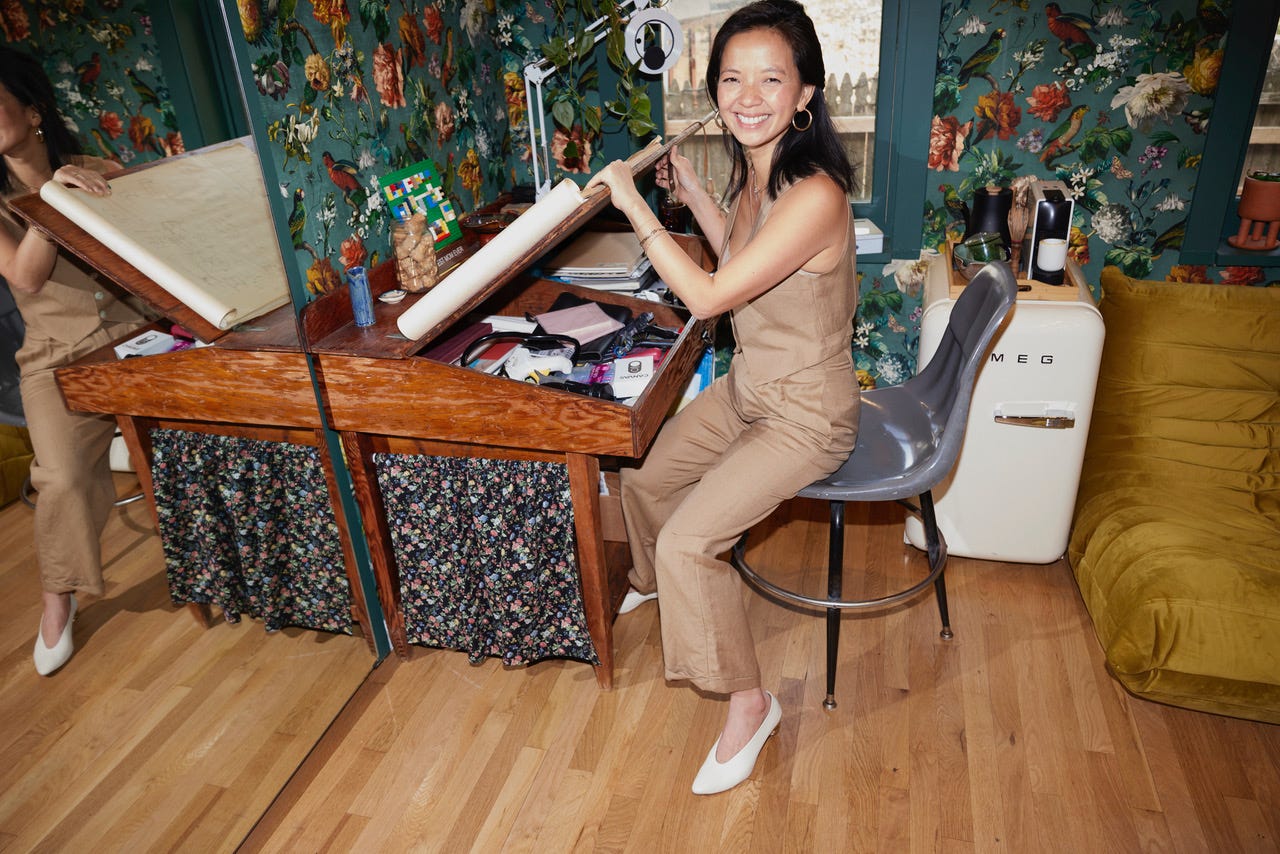
Today, nearly six years after the onset of Covid-19, small businesses face a fresh set of challenges on top of longstanding ones. The introduction of new tariffs, which has largely dominated headlines in 2025, has had a “major effect,” says Alcalay. While her woven pieces are all produced in New York City, the United States does not have robust textile production, which means Alcalay sources fabrics such as wool from other countries and also scouts globally for the very best brands to sell in her stores. Some of these brands, she says, are now simply too expensive to carry.
Relatedly, recent changes to the “de minimis” policy mean smaller-value shipments now face import duties, which has resulted in shipping surcharges, making every step of the import process more expensive for small businesses. And while staffing has always presented challenges for Alcalay’s stores – healthcare is not a feasible benefit in a business of her size – she worries now about the larger decline of skilled craftspeople in factories. There is a shortage, she says, of young people who aspire to work in skilled labor, and most factory workers in the garment industry are in their 50s and 60s. She feels confident in the operations of her own stores, but is concerned for the legacy of the industry as a whole, and wishes more young people understood the gratification of making something with their hands – “just completing something, and getting better at it” – and the value of seeing something through from ideation to finished product. “It’s always the doers,” she says, who ultimately make any vision reality.
It’s these “doers” we support directly when we shop small. With the holiday season now upon us, our responsibility is not only to buy gifts for friends and family, but to do so in a way that bolsters the businesses that invest in us and the communities where we live. “If you stop shopping at Amazon or Target or other big stores, they’re not going to feel it,” Alcalay says. “If just a few people stopped shopping here, it would make a huge impact. We’re talking about real people who live in the neighborhood. You have to invest in the neighborhood you live in.”
There are multiple ways to support even if you can’t afford to financially – see below for Alcalay’s advice:
Don’t underestimate word of mouth: Telling friends about local shops can have a real impact, as can dialogue with store employees themselves: “when you see something nice, let the people inside know…support can come in so many different ways,” Alcalay says.
Make smaller purchases: “Not everyone can shop small, not everything is accessible,” says Alcalay, “but there are plenty of shops where you can pick up things for five or ten dollars, and if everybody does it, it changes the entire face of the neighborhood.”
Be kind: “The people inside the shops are human beings who work really, really hard. Be kind to them,” says Alcalay. And if you have any critical feedback, take it up with the small business owner or management directly rather than posting on Google or Yelp.
Get ahead of the holidays: If you are able to afford shopping small, shop early! Inventory in local stores is often limited, and may sell out closer to major holidays. If you find yourself facing that dilemma, consider purchasing a gift card, and also returning in January or especially February when business often slows down.
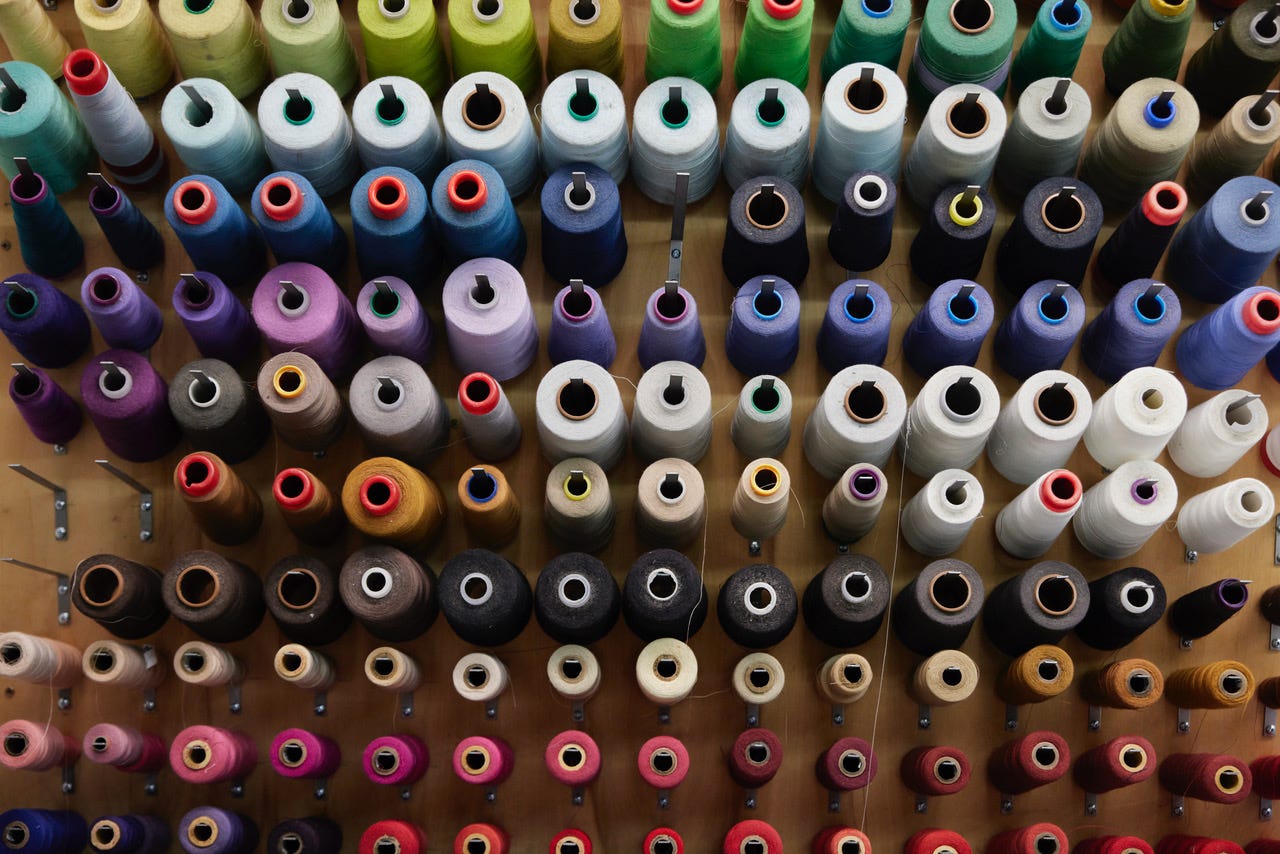
While it’s always been the case that small businesses prioritize people and center community, the human impact of shopping small may be more important now than ever. In a world with an ever-increasing presence of artificial intelligence and an online inundation of sponsored content, “you don’t even know what’s real anymore,” says Alcalay. “I just feel like everything is kind of grey.” But a shop where you can see a garment-maker in the back – Alcalay’s studio sits in the rear of her namesake boutique space – who can tell you the story of that garment as her mother explained it to her, in a language of buttons and bobbins – that’s our way to reclaim humanity, one colorful thread at a time.
Love Christine!