The Making of Scarface: Park Slope and the Early Days of Al Capone
The Brooklyn Roots of America’s Most Infamous Gangster

Nick Bello is a writer and photographer based in Park Slope. He loves to capture local scenery as well as research local history. Follow him on Instagram @nbello8 or on substack at:
How is Park Slope, known now for its charming brownstones and close proximity to one of the largest parks in NYC, responsible for producing one of the notorious criminals in American History? Many studies have been conducted to figure out what factors rely on determining whether or not someone will be a criminal. A few have concluded that if your family has criminals, then the statistical likelihood of you being a criminal is high. Another major factor is psychological makeup, with people who have narcissistic and psychopathic personality traits being the main culprits for crimes. A third factor is environment, where a theory called the Chicago Schools Theory, points to the neighborhood you grew up in, and the social disorganization you grew up in, as a factor in becoming a criminal.
The Early Days
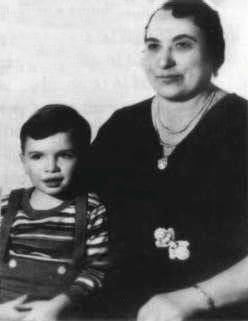
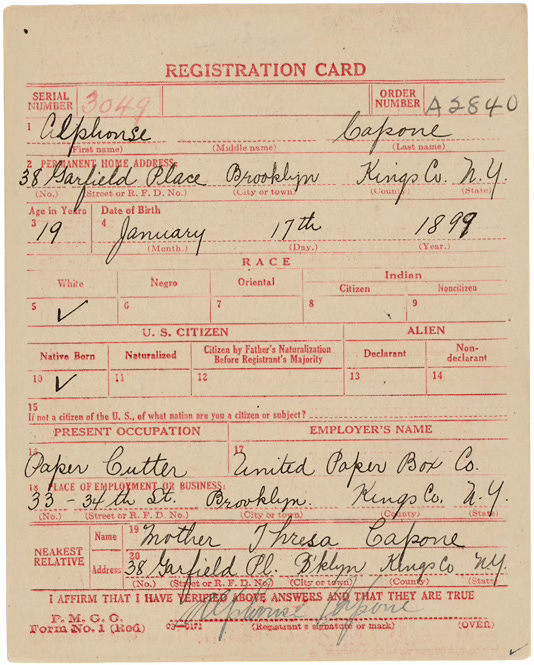
Born Alphonse Gabriele Capone to Teresa and Gabriele Capone, Italian immigrants who came to New York from Sicily just six years before, Capone spent his early years on Navy Street near the Brooklyn Navy Yard. Early on he joined a local youth gang called the Boys of Navy Street. When Capone was 8 years old, he and the gang went out one night to punish a group of Irish men who had been harassing Italian women. The gang of boys marched through the streets with Capone donning a washtub strapped to his chest that he used as a drum and beat a song that the boys chanted to. When Capone was 11, the family would eventually make the move to Park Slope, a once upper middle class neighborhood that was now seeing a heavy influx of working class Italian families like the Capone’s. The Capone’s lived in multiple residencies on Garfield Place, the first being 38 Garfield Place before eventually settling at 21 Garfield Place. While attending P.S. 133 on Butler Street and 4th Ave, Capone hit a teacher during a classroom brawl and was promptly expelled. Capone was a smart student but he had problems with rules, leading him to eventually quit school after this incident. This is where Capone would start his involvement in the Mafia world, joining small gangs like the Junior Forty Thieves, the Bowery Boys and the Brooklyn Rippers.


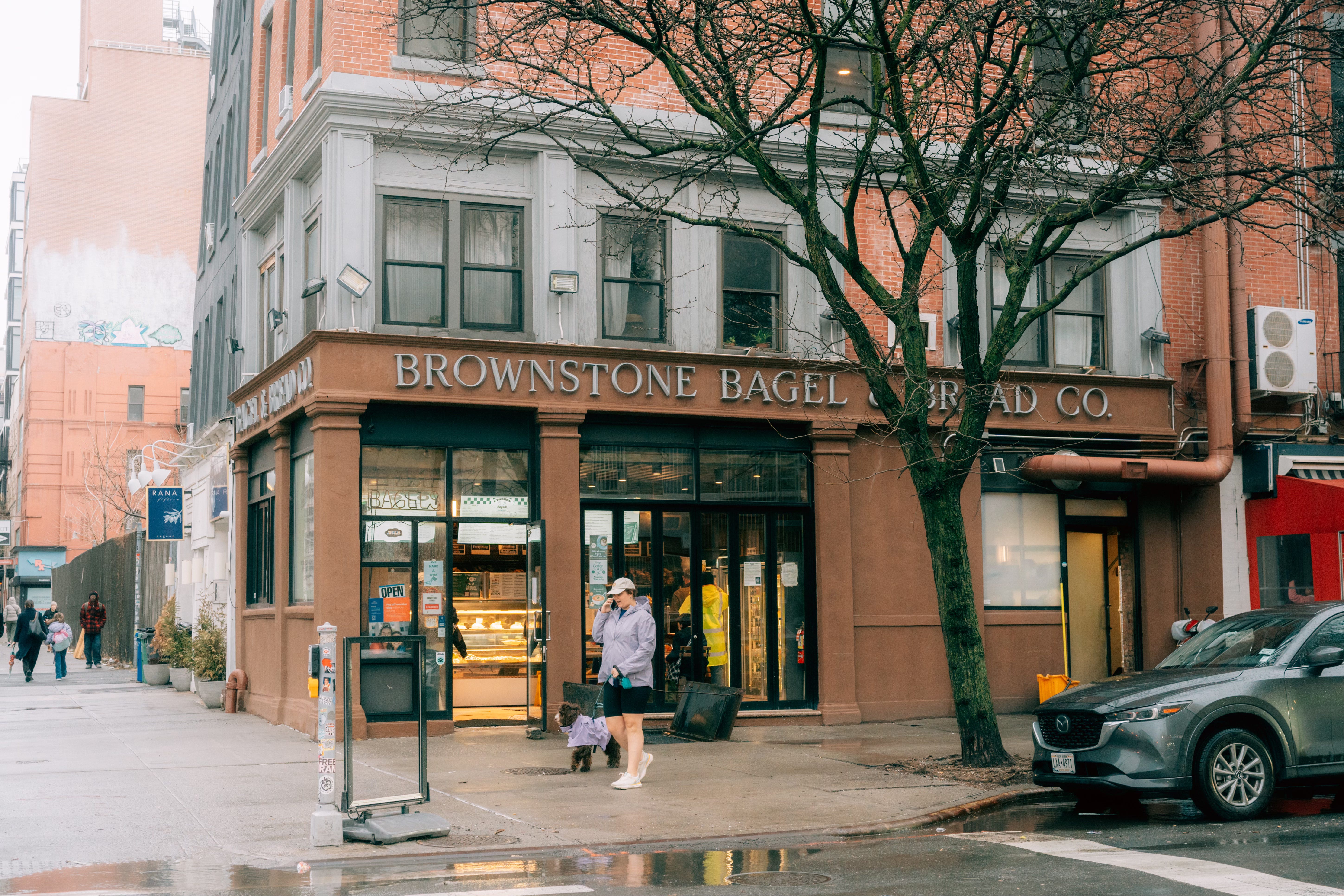
With nothing to do now, Capone resorted to hanging out at various neighborhood joints. In Frank DiMatteo and Michael Benson’s recent book, Red Hook: Brooklyn Mafia Ground Zero, it is said that Capone hung out at a place called Pop’s Poolroom and when the place was eventually sold many years later, someone came in and bought the pool table that Capone played on. Another club Capone reportedly hung out at was the Association Club on Union Street and 4th Ave on the second floor of where Brownstone Bagels currently is. This is where young Capone would get his start in New York’s underworld as the club was owned by Johnny “The Fox” Torrio, a revered gangster who also mentored another infamous Brooklyn gangster named Frankie Ioele, or Frankie Yale as he became known as since his last name Ioele in Italian sounded similar to Yale.
Scarface Gets His Scars
Torrio really took Capone under his wing and introduced him to mob life. Torrio started his mob career by helping to create the James Street Boys gang in Manhattan, eventually creating an alliance with the infamous Five Points Gang. He owned a saloon which interested the Five Points Gang as a place to run rackets. On top of all of this, Torrio also managed brothels with some being in Brooklyn. He saw potential in the young Capone, bringing him into the Five Points Gang and giving him some small jobs running errands. Eventually Torrio introduced Capone to Yale who offered him a job as a bouncer at his bar in Coney Island, the Harvard Inn.
The Harvard Inn is where most believe Capone would get the scars that came to define him the rest of his life. The details around this incident and when they happened are murky, like most mafia stories from that time. However, it is generally agreed upon that on that one night Capone made a lewd comment to the sister of a woman and her brother, Frank Galluccio, took offense. Galluccio and Capone got into an altercation and Galluccio pulled out a knife and slashed Capone in the cheek and neck. Capone was rushed to the hospital and recovered from the attack, but the scars would be with him forever. Some say that Galluccio would later give Capone a job after the incident as a way of reconciling.
However…
There is evidence to believe that this story, which has been told in countless books about Capone’s life, is not true. At the bottom of the December 9, 1918 edition of the Brooklyn Daily Times, a brief description reads of a man named Alfonzo Capone who lived at 38 Garfield Place was attacked by two men, one of which “slashed his right cheek with a knife.” It should be noted that Capone was actually slashed in the left cheek, but stories in newspapers often at first include wrong details like this. Capone was attended to in the street by a doctor from Methodist Episcopal Hospital (now New York Presbyterian) in Park Slope. Mario Gomes, an expert Al Capone historian and owner of My Al Capone Museum, believes that the original story, which took place at the Harvard Inn would seem impossible if Capone was taken all the way from Coney Island to Park Slope to have his wounds treated. Furthermore, another hole in the original story is that it is frequently told that the incident happened in the summer of 1917, a whole year before this story from the Brooklyn Daily Times appears and during Coney Island’s off season. Capone and Gallucio also both lived near each other in Park Slope, raising the question; why would they have been all the way out in Coney Island at that time of year?

So if this did not happen in Coney Island, then where did it actually happen? According to Gomes, someone told him a more plausible story but requested to remain anonymous. The story went that a dance was happening at Columbia Hall, located at 725 Union Street, on December 7th where Capone was in attendance along with Gallucio. On the dance floor, Capone made a lewd remark to Gallucio’s sister which started a fight between Capone and Gallucio. Capone left the party in search of some food and ended up going around the corner to a restaurant located at 212 5th Avenue where the current Associated Supermarket is. Gallucio followed Capone in there and the two got into an argument where Gallucio eventually took a steak knife from the table and stabbed Capone in the face. Capone ran out of the restaurant and a passerby called for a doctor from the only nearby hospital, Methodist Episcopal Hospital on 7th avenue. While there is no way of knowing if this story is exactly what happened, it is much more plausible given the evidence we have and the proximity of events to the hospital where the doctor reportedly came from to help Capone.

Capone The Baseball Player

Something that is not widely known about Capone is that he played amateur baseball in Park Slope for a few years and was a star player. In recently discovered newspaper clippings from the Brooklyn Citizen and Brooklyn Times Union, Capone played first for the St. Michaels Church team and then later he and his brother formed the Al Capone Stars. A big reason why Capone played baseball is because of his brother Ralph, who was five years older than Capone and was someone he looked up to. Capone was originally an infielder before he eventually moved to the mound, becoming a pretty decent pitcher. In one game against Lockport Athletic Club, Capone struck out fifteen batters while also getting three hits. It appears that Capone’s team played at Washington Park in front of the Old Stone House where the Brooklyn Dodgers got their start. According to a New York Post interview with Mario Gomes, this small part about Capone’s life was overlooked because in some of the newspaper clippings, Capone’s name was spelled wrong which made it hard to find.
From Brooklyn To Baltimore To Chicago
In 1918 Capone married an Irish girl named Mary “Mae” Coughlin, whom he reportedly met at an Irish bar that once occupied where Luana’s Tavern currently is in Carroll Gardens. The pair were married at St. Mary Star of the Sea church in Carroll Gardens, and soon after had a son Albert Francis “Sonny” Capone. After the birth of his son, Capone wanted a quieter life away from Brooklyn. He found a stable bookkeeping job in Baltimore, which kept him out of trouble back home. After the death of his father however in 1920, the mafia life would come calling for him again.
Capone would move to Chicago at the request of Torrio to help him as an enforcer. Torrio had been in Chicago since 1909, working with a man named “Big Jim” Colosimo, who was a crime boss. Capone became a bouncer for Torrio at his brothel, which is where some suspect he contracted syphilis. He would also get involved in Torrio’s bootlegging business which was becoming popular because of Prohibition. The same year Capone came to Chicago, Torrio ordered a hit on Big Jim. It is reported that Frankie Yale had traveled from New York at the request of Torrio to complete the hit.


With Big Jim gone, Torrio was now the man in charge. With that came a target on his back as the way in which assumed his new job made him a prime target for retribution. Torrio was a good negotiator and was able to keep the peace between all of the Chicago gangs, except for one, the North Side Gang, led by Dean O’Bannion, who found Torrio unreliable in dealing with the Genoa Brothers who were encroaching on their business. Torrio got wind of this and put a hit out for O’Bannion which happened in his flower shop in 1924. This made a man named Hymie Weiss the leader of the north Side Gang who was a close friend of O’Bannion’s and sought revenge for the killing. In January of 1925, Capone was ambushed and Weiss would finally get to Torrio, shooting at him while he was with his wife and kid. They would all survive but this caused Torrio to rethink his life and he effectively retired from the mafia life and moved to Italy, leaving Capone in charge.
One Night At The Adonis
I live just off on 21st Street in what is considered South Slope/Greenwood. It is a very quiet part of the Slope, a place where a lot of families have chosen to settle down. Much to my surprise while researching Capone’s early life, one of his first and arguably most consequential murders happened just down the street from me, in this now quaint and quiet part of the new Slope. A lot of Capone’s early life is shrouded in mystery as you may have read so far. There’s a lot of he-said-she-said, which is common for mafia stories. This part is shrouded in mystery as well and is not commonly told in a lot of retellings of his life, but it helped change the tide in the mafia business of Brooklyn.
Around 1925, Capone’s son had gotten sick with a mastoid infection in his ear and needed expert medical attention. Doctors in Chicago told Capone that treatment would leave Sonny deaf, leaving him to seek a second opinion with a doctor in New York. They take the trip back home and Sonny is operated on, which did leave him partially deaf. Capone got reacquainted with his home city, reportedly meeting with Yale to discuss his bootlegging business, which was going very well as Capone was working with Canadian bootleggers who helped him smuggle liquor into the U.S. Capone also owed Yale a favor as Yale had helped get rid of Big Jim so that he and Torrio could be in charge of Chicago.
During this time, Yale faced a major threat from the Irish gang of Brooklyn, the White Hand. They were based primarily in what is now Vinegar Hill and ran the docks of Brooklyn, making money off of all of the shipments that came and went which included alcohol. The Italians and the Irish did not get along for a multitude of reasons. But the biggest reason was the battle for the waterfront, which led to the murders of a lot of people on both sides. In 1923, Yale is reported to have ordered the hit of “Wild Bill” Lovett, a formidable leader of the White Hand, at a speakeasy at 25 Bridge Street in Vinegar Hill. This left Lovett’s successor, Richard “Peg Leg” Lonergan, in charge. Lonergan got his nickname when he lost his leg in a trolley car accident. He was involved in a dozen murders throughout his life and was known for having a hatred for Italians. His sister Anna had been married to his former boss as well, and she would marry another man, Matty Martin, much later on who would also be murdered.
On Christmas day in 1925, Lonergan and a few of his fellow White Hand members would attend a party at the Adonis Club, located at 152 21st Street in what is now South Slope. Whether or not they were intentionally lured there by Yale and Capone is still unknown, as some accounts say they were but some say they weren’t. Once at the party, it is reported that Lonergan, already heavily intoxicated, started making derogatory remarks against the Italians that had gathered there that evening. When three Irish girls walked into the club with Italian men, this sent Lonergan off as he made more remarks. Suddenly, the lights in the club turned off and several shots were fired, killing Lonergan and the other White Hand members. When the police arrived, they found a gruesome scene of turned over tables, blood and bodies. Witnesses are eventually tracked down but none of them say a word about what happened at first. Even the family who lived above the social club said they had not heard anything. On December 27, Capone was arrested along with seven other men for the murder. However, no proof was ever found to convict them and a few days later they are all let go on bond. Capone was never charged with the murder.
These Streets Made Capone
Where the Adonis Social Club used to be is now a Comfort Inn, there is no trace left of where the murder took place. In fact most of the street, aside from the garages across from the hotel, is fairly new. The neighborhood has changed a lot since Capone’s early days, as the working class families have been outpriced by the growing demand of housing in Park Slope. The houses that Capone once lived in on Garfield place have both been redone and have sold for multimillions in the last few years. Even the school, P.S. 133, where Capone’s violence was first seen, has been remodeled. The new builds and new facades can not cover up the fact that these streets and these places were responsible for making Capone. Had he not been thrown out of school at a young age, would he have not met Johnny “The Fox” Torrio or Frankie “Yale” Ioele, the men who brought him to the dark side of the mafia business? Who’s to say. Would he not eventually end up at Alcatraz if he had found some more success on the mound of Washington Park as a star pitcher for the team him and his brother created? Who knows. What transpired into the life of one of America’s most prolific gangsters all had its start right here, in Park Slope.


